Vision
To deliver a HITRUST- certified, unified platform to support single or multi-institution projects utilizing a governance framework defining who may access data, for what purpose, and under what conditions, ensuring responsible use across UT System institutions.
UT-HIP Data Platform
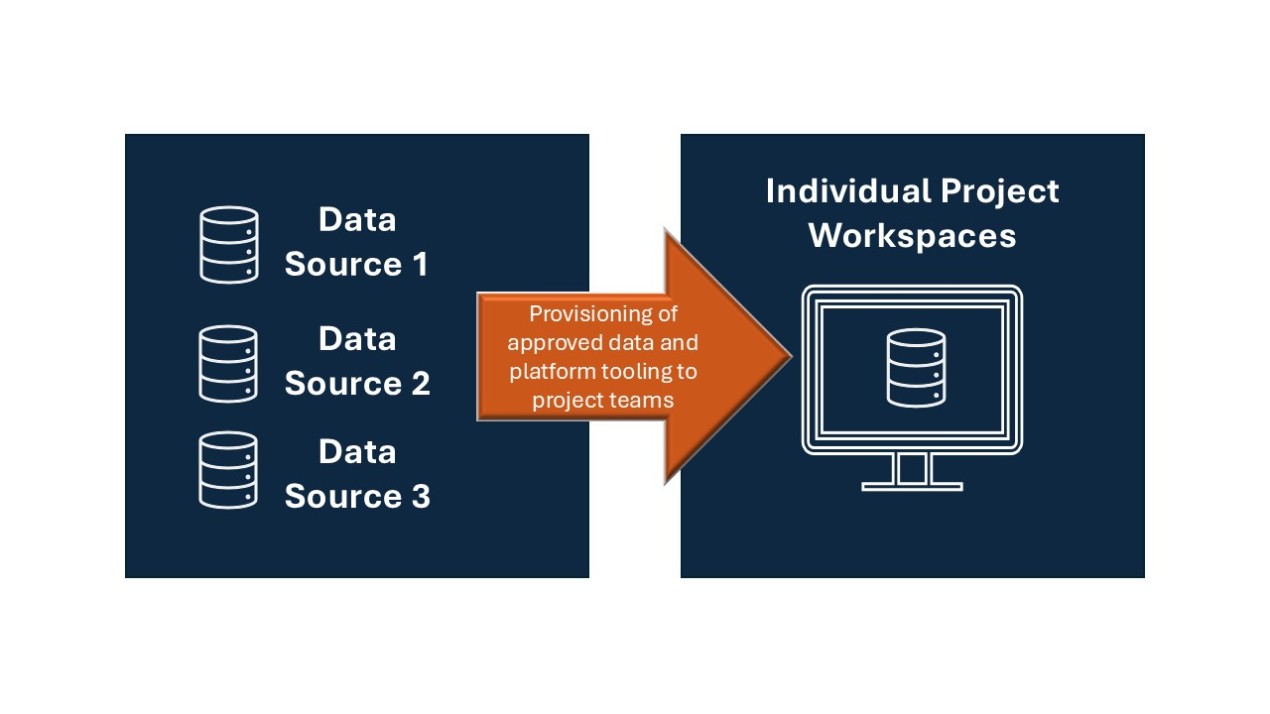
The UT-HIP Data Platform will allow any student, staff or faculty from a UT System organization to access a secure, self-service data environment where researchers and teams can create data reports and analytics using data available on the platform, as well as other datasets. Data available through the UT-HIP Data Platform cannot leave the platform.
Menu of Technical Tools & Capabilities
Available Now:
Accelerators
- De-identification modules (HIPAA-aligned) – can be used with any data set
- LLM usage frameworks
- Metadata-driven ingestion frameworks
- RAG pipeline frameworks
AI / Machine Learning
AI / Machine Learning
- Azure Machine Learning (AML)
- Experiment tracking
- Fabric Data Science workloads
- Model deployment endpoints
- Model training / evaluation
- Python (pandas, scikit-learn)
- PyTorch / TensorFlow (via AML)
Large Language Models
- Azure OpenAI (enterprise-grade LLM)
- GPT models and embedding models
- Microsoft AI Foundry
- Notebook and application integration
RAG (Retrieval-Augmented Generation)
- Azure OpenAI (LLM + embeddings)
- Document indexing pipelines
- Fabric-based data grounding patterns
- Vector search patterns
BI & Analytics
- Direct Lake (low-latency analytics)
- Fabric-native dashboards
- Power BI (Enterprise)
- Semantic models, Row-Level Security (RLS)
Storage and Compute
Compute Capabilities
- Azure VM-based compute and external tools (on request)
- Fabric-managed compute (Spark / SQL)
Data Platform & Storage
- Data Warehouse (SQL engine)
- Lakehouse (Delta tables, Spark + SQL)
- Microsoft Fabric (primary platform)
- OneLake (unified storage)
- OneLake Shortcuts (cross-source data virtualization)
- Real-Time Analytics (Eventstreams)
Data Size & Scalability
- Distributed processing (Spark)
- No predefined storage limits; scales with data volume (TB, PB)
- Scalable storage (ADLS / OneLake)
Storage & Architecture
- Azure Data Lake Gen2 (external ingestion and landing zones)
- Delta Lake format (ACID transactions, time travel)
- Medallion architecture (Raw / Silver / Gold)
- Secure SFTP ingestion endpoints
Data
Data Engineering & Transformation
- Data quality validation and reusable pipeline frameworks
- Dataflows Gen2, ETL/ELT pipelines
- Fabric Notebooks (PySpark, SQL)
- Fabric Warehouse / Lakehouse endpoint
Data Ingestion & Integration
- Fabric Data Pipelines
- Fabric Eventstreams / Azure Event Hub (streaming)
- Batch ingestion patterns
- Metadata-driven pipelines
- Secure landing zones (ADLS, SFTP)
Synthetic Data
- Scenario-based dataset generation
- Synthetic data generators
DevOps & Engineering
- Azure DevOps
- Git Repos
- GitHub (project-dependent)
Security
Security & Identity
- Audit logging and lineage
- Microsoft Entra ID
- RBAC / RLS (Row-Level Security)
- Data Encryption
Security Tools
- Microsoft Sentinel (SIEM)
- Microsoft Defender Suite (Endpoint, Identity, Office 365, Cloud Apps, Storage, SQL)
- Entra ID (MFS, Conditional Access Policies, JIT access to privileged roles)
- Network Security (VNET, NSG, Network Firewall, Web Application Firewall)
- Tenable (Vulnerability Management)
- BitSight (External risk scoring)
- Microsoft Exposure Management (Unified view of attack surface and risk)
In Development:
Accelerators
- Data quality validation frameworks
- Prompt engineering & testing templates
Cohort Builder
Compute Capabilities
GPU workloads available via Azure / AML / TACC (approval required; limited capabilities)
Usage Monitoring
- Cost and usage Reports
- Log Analytics Reports
Data, Workspace and Project Request Process
- Click on the link to submit a request: Requests | UT Health Intelligence Platform
- Note: any staff or faculty research is eligible to submit a research request. Student requestors must have a faculty advisor/sponsor to have their request considered.
- Your request will be reviewed by our committees and a decision will be made. If you request has been accepted, you will be given access to the UT-HIP Secure Data Platform.
Note on Personal Health Information (PHI) Access
To ensure the confidentiality and protection of sensitive health data and remain in compliance with privacy regulations and standards, data use and data governance review will be conducted for each data request.
For any questions or if you need further PHI access, please contact uthip@utsystem.edu.
